Microtechnology
The laboratory for Applied solid-state Physics is a combined teaching and research laboratory.
The research section of the laboratory contains special measuring techniques such as lock-in amplifiers, impedance measuring devices, coating thickness measuring technology, inductive measuring technology for determining the electrical properties of liquid metals, liquid metal tomography for investigating phase transitions and solidification processes.
These special measuring techniques are used for research internships, Bachelor's and Master's theses and research projects.
Contakt
Head: Prof. Dr. Dominique Buchenau, Prof. Dr. Bernd Ploss
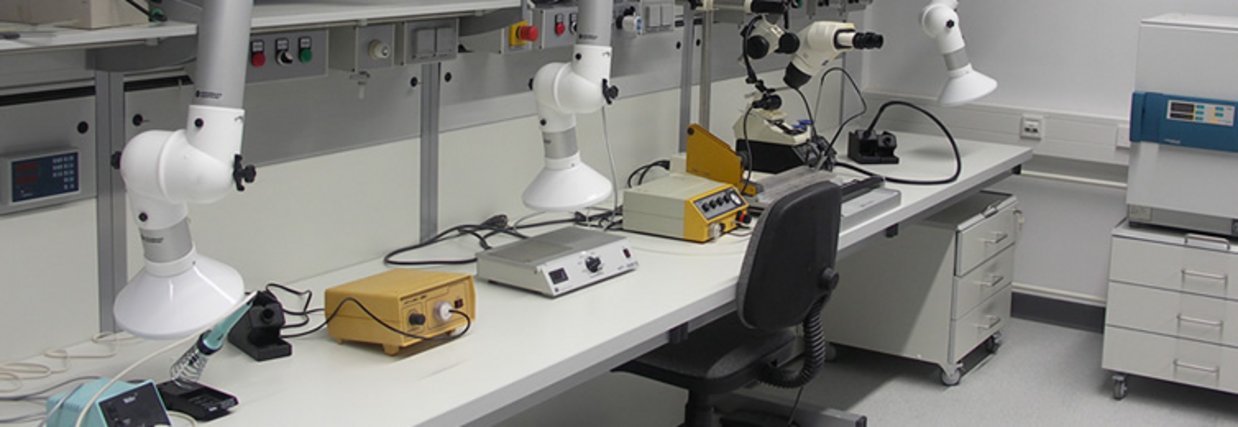
The knowledge of packaging and interconnection technology is deepened in the practical course of the microsystems technology lecture. In basic as well as complex experiments, the students can put the theoretically acquired knowledge into practice.
Contact
- Head: Prof. Dr. Michael Rüb
- Staff: Tina Bischof
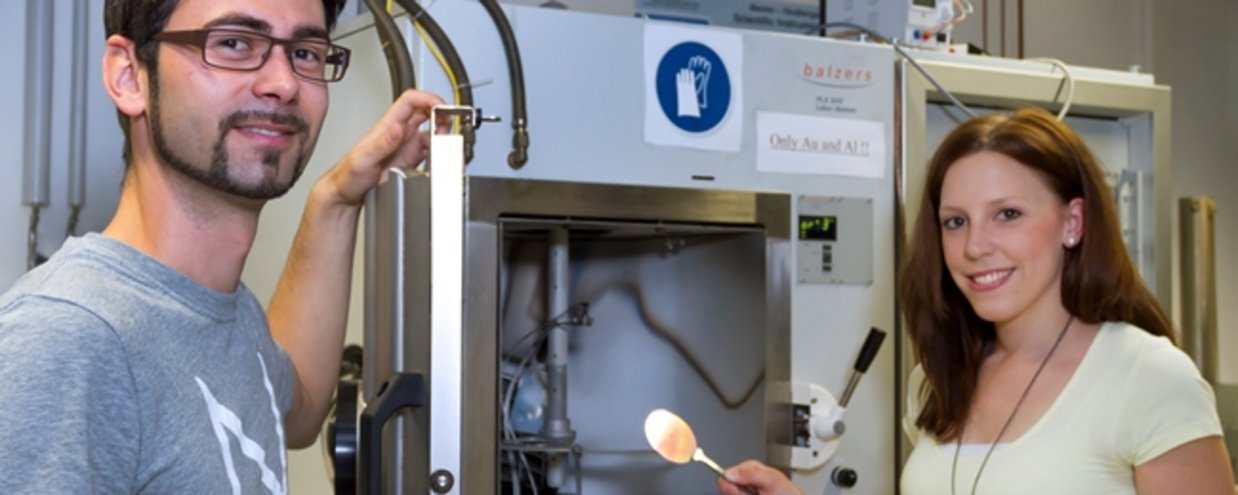
The knowledge of coating technology is deepened in the practical course on the lecture complex Physics Technologies/ Microtechnology and Thin Films. In basic as well as complex experiments, the students can put the theoretically acquired knowledge into practice.
Important focal points in the practical course are:
- Design and operation of vacuum systems
- Coating by thermal vapor deposition
- Electron beam evaporation
- Coating by sputtering (DC, RF)
- Ion beam cleaning
- Measurement of device properties at low temperatures
- Fabrication of optical coatings
Contact
- Head: Prof. Dr. Michael Rüb
- Staff: Tina Bischof
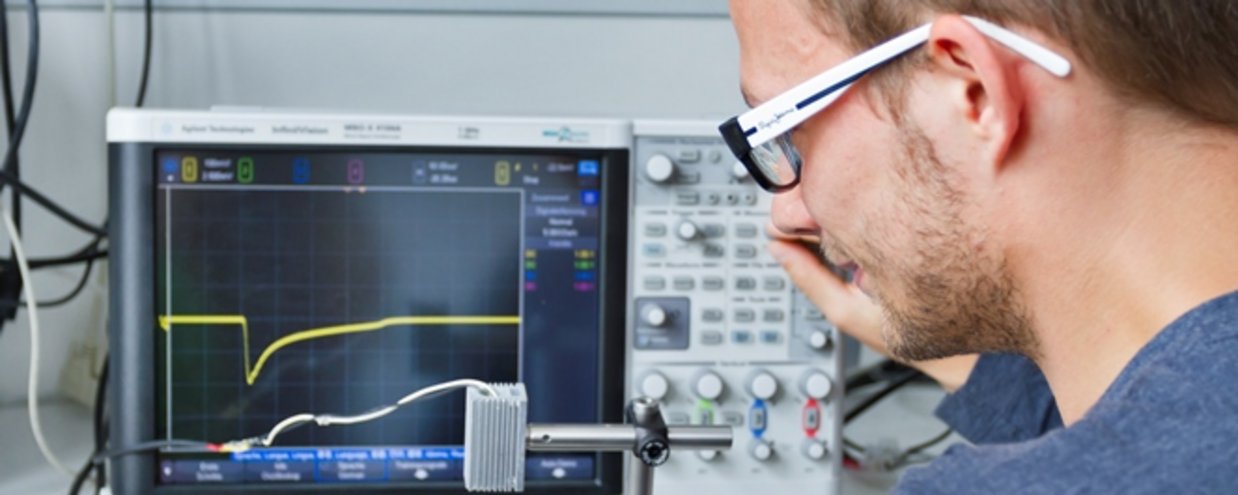
The Physical Measurement Laboratory laboratory is a combined teaching and research laboratory.
Bachelor students carry out the practical experiments temperature, radiation and particle measurement as part of the ‘Physical Measurement Technology’ module. Each of the experiments highlights a different area of experimental physics, provides the necessary physical background and demonstrates different experimental techniques.
In the Master's degree programmes ‘Scientific Instrumentation’ and ‘Applied Materials Science’, the experiments Dielectric Hysteresis, Dielectric Permittivity and Inductive Measurement Techniques are carried out as part of the ‘Materials for Sensors and Electronics’ module.
Contact
- Head: Prof. Dr. Dominique Buchenau, Prof. Dr. Igor Konovalov
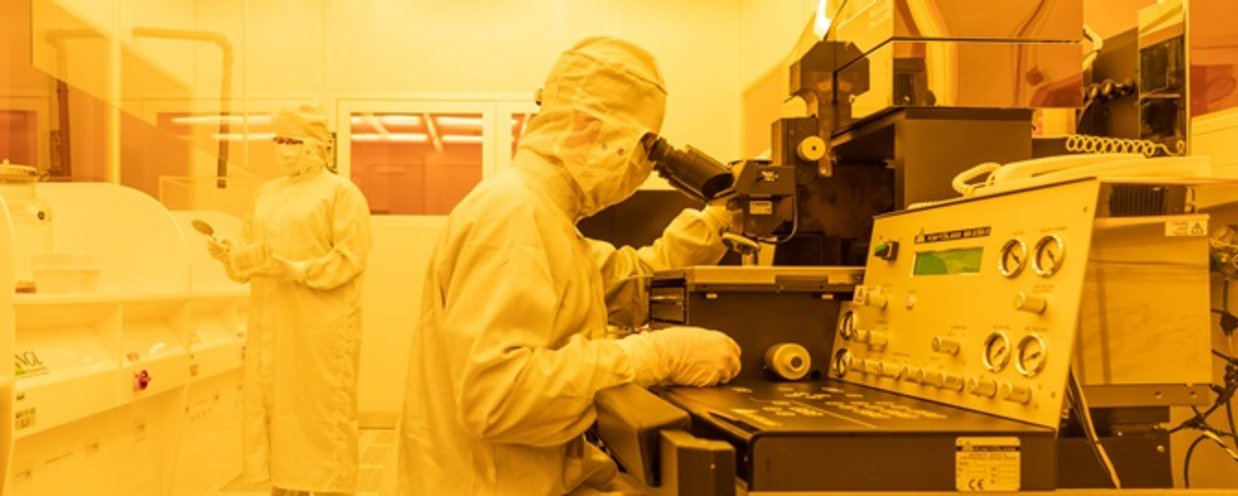
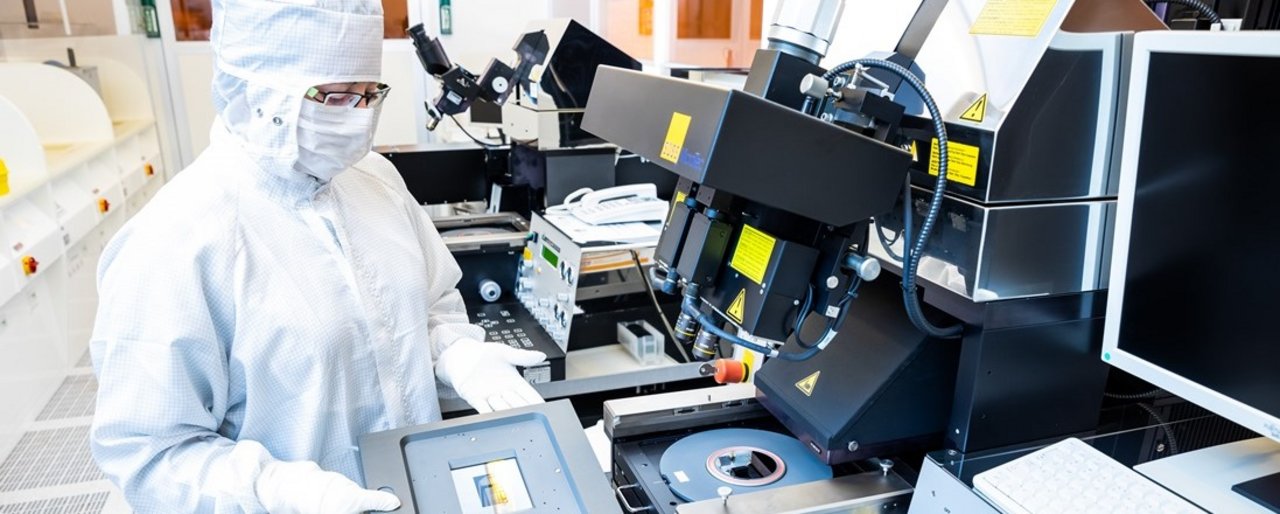
The cleanroom consists of four separate booths with a total area of approx. 125m². The cleanroom class varies from 1000 to 10000. Various lithography techniques (electron beam, contact and distance exposure, interference lithography) are established in the cleanroom. In addition, wet chemical methods for isotropic etching of metals and anisotropic etching of silicon are available. A number of analytical methods for characterization of the fabricated structures are available.
In the laboratory practicals, students are trained in the fundamentals of common and future lithography processes and in the use of the materials and instrumentation required for these processes. The theoretical background is acquired in the lectures Physical Technologies/ Microtechnology, Microsystems Technology, Micro- and Nanostructures and Thin Films.
Etching
- 3 wet workstations
- KOH etching system for anisotropic silicon etching
Analytics
- Inspection microscope
- Microscope Zeiss Axiovision
- Surface profilometer, DEKTAK³
- 4 Peak measurement
- Optical coating thickness gauge, FTP Advanced
Contact
- Head: Prof. Dr. Michael Rüb
- Staff: Tina Bischof
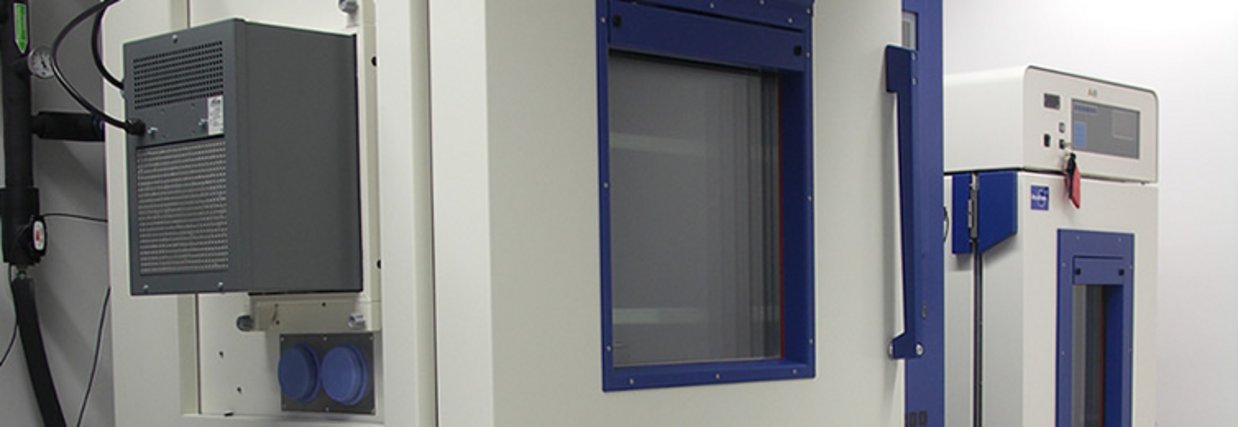
In the practical course on thin films and microstructuring, theoretical fundamentals for the design of masks and thin film structures, as well as their testing, are deepened.
The practical course is supplemented by simulations and an experiment on the temperature behavior of solar cells.
Contact
- Head: Prof. Dr. Michael Rüb
- Staff: Tina Bischof
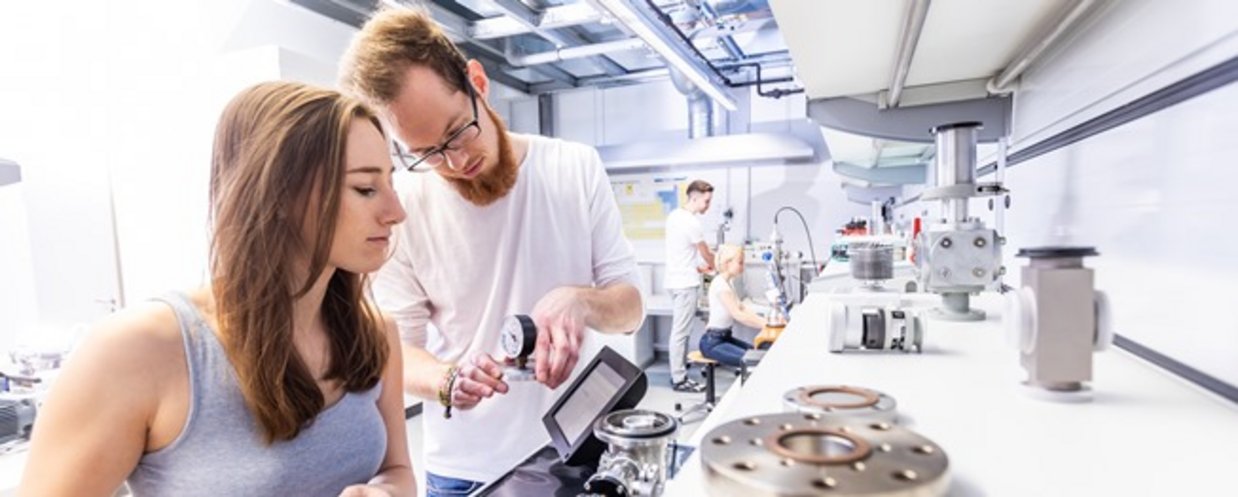
In the laboratory, Bachelor students will find vacuum pumping units (rotary vane pumps, oil diffusion pumps and turbo molecular pumps) for achieving different pressure ranges, including suitable vacuum measurement techniques. In addition to the vacuum technology systems, the construction and commissioning of a cryogenic magnet system is planned.
Furthermore, investigations into the magnetic behaviour of steel materials under the influence of mechanical stresses will take place in the laboratory. As part of several interlinked research projects, the project is concerned with the development of contactless sensor technology based on magnetic and inductive measuring and functional principles.
Contactless measuring methods are proving to be very useful for measuring in environmental situations characterised by aggressive conditions (chemical additives, high temperatures or optically opaque operating conditions). In terms of resource efficiency and sustainability of energy-intensive processes and the improvement of operating condition monitoring, control and analysis, contactless sensor technology makes important contributions in a wide range of application areas.
Contact
- Head: Prof. Dr. Dominique Buchenau, Prof. Dr. Maria Dienerowitz